
Back to the beginning—where magic, motherhood, and chocolate converge in Marseille.
Joanne Harris has taken us back to where it all started—but not in Lansquenet. Vianne is a prequel to Chocolat, and yes, that means more than just one more chocolate-coated adventure in a French village. Instead, it’s a gentle origin story, full of flavour and quiet revelation.
Vianne Rocher is not yet Vianne. Initially Sylviane Rochas, she’s a young, penniless, pregnant woman—still searching for direction—who marks a turning point in Marseille. She scatters her mother’s ashes in New York, succumbs (almost enchantingly) to the call of the changing wind, and reinvents herself in the south of France.
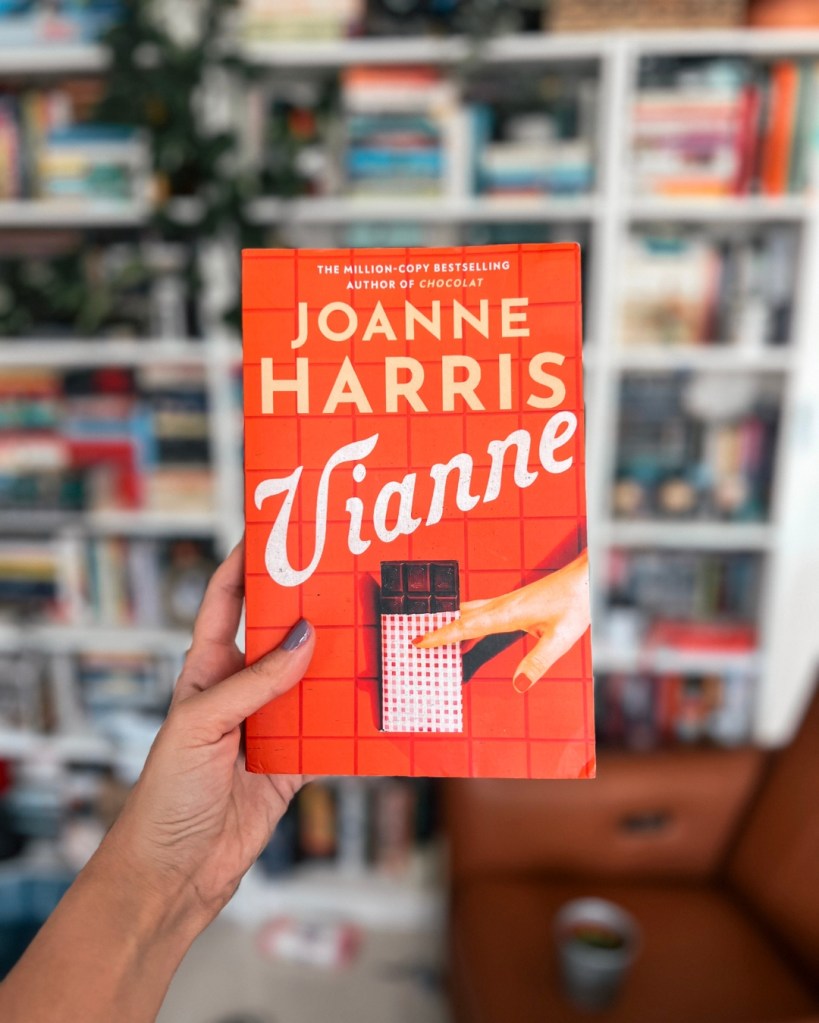
In Marseille, she falls into work as a waitress in a modest bistro. She navigates her pregnancy, leans into new scents and flavours, and finds a secret weapon she didn’t know she had: cooking, especially with chocolate. Through bittersweet spices and recipes borrowed—and transformed—Vianne begins to unlock more than just taste. She unlocks stories, secrets, hearts.
The characters who surround her are vivid and real. Louis, the bistro owner, is mourning his late wife, Margot—whose recipes Vianne respectfully adopts. Guy and Mahmed, chocolatiers setting up shop nearby, introduce her to the sensual alchemy of raw cacao and chocolate spices. It’s here that the whisper of magic begins—not in incantations, but in aroma, texture, and memory.
Motherhood pulses through the narrative—less as a plot device and more as a hum beneath the surface. Vianne is navigating loss, longing, hope, and the fear of roots in equal measure. She’s torn between the comfort of belonging and the tension of running—echoes of her mother’s warnings about revealing desires too openly.
As a fan, this book felt like uncovering the first pages of a myth I already know by heart. It’s slower, softer, more reflective—less spectacle, more soulful. Harris doesn’t need big set-pieces. She thrives in small flourishes: the hiss of steam, the tang of citrus in chocolate, the shiver of wind carrying someone’s memory.
Is it exactly like Chocolat? No—and it shouldn’t be. Vianne doesn’t retread old ground; it rewinds the tape. It’s not as showy, but it has weight. It gives context to Vianne’s wanderlust, to her intuition, to the quiet earthiness she’s known for later.
This wouldn’t be a faithful addition to the series if it didn’t connect to the later arc—so any perceptive reader will see the evolution of Vianne’s identity, her intuitive magic, and her way with food take shape. It closes the circle between who she could be, and who she becomes.
In short: Vianne is less about what happens, and more about how it happens—and how it tastes. If Chocolat was a spark, Vianne is the ember. It’s a delicious beginning, and it reminded me of why I fell into this world in the first place.


 Myths & Stories
Leave a comment