
At the edge of the fields, when the last sheaf of grain had been bound, Mokosh stood with her spindle in hand. Threads of gold and crimson spilled from her fingers, weaving the sunlight into the earth one final time.
From the forest’s shadow came Morana, her cloak embroidered with frost, her eyes dark as the still waters of a frozen lake. She reached out, and the trees shivered; the stubble of the harvest bowed its head beneath her breath.
“Why must you come so soon, sister?” Mokosh whispered, her voice warm as bread from the oven.
“Because all that lives must rest,” Morana replied, her voice a hush of wind through bare branches. “Your threads are woven. Now mine must bind the world in silence.”
Between them, the air trembled—the glow of firelight meeting the cool kiss of ice. And the Slavs, watching the turning of the year, gave thanks to both: to Mokosh, who filled their barns, and to Morana, who promised that only through endings could spring return.
When the leaves turn to fire and the air grows sharp as a blade, the world holds its breath. Autumn is not only a season but a spell—the earth exhales gold, only to fall silent, waiting for frost’s first touch. For the ancient Slavs, this was not a simple change of weather. It was a crossing, a threshold between abundance and death, where every shadow whispered of the gods and spirits who wove fate into the turning year.
Mokosh — Weaver of Earth and Fate
In the glow of harvest, when grain filled the barns and wool was spun into warmth, Mokosh reigned as the heart of the season. She was the earth’s mother, her hands always busy: spinning threads of destiny, wringing rain from the clouds, blessing women and the fruits of their labor. To her, women offered woven cloth and bread, as if each gift could tie the last rays of the sun into their homes. Fridays were her sacred day, when prayers were whispered like threads through the loom.
Mokosh is the reminder that the earth is generous, but also exacting: what you spin, you will wear; what you plant, you will reap. And in autumn, she was thanked with reverence, lest her gifts grow silent in the cold months to come.

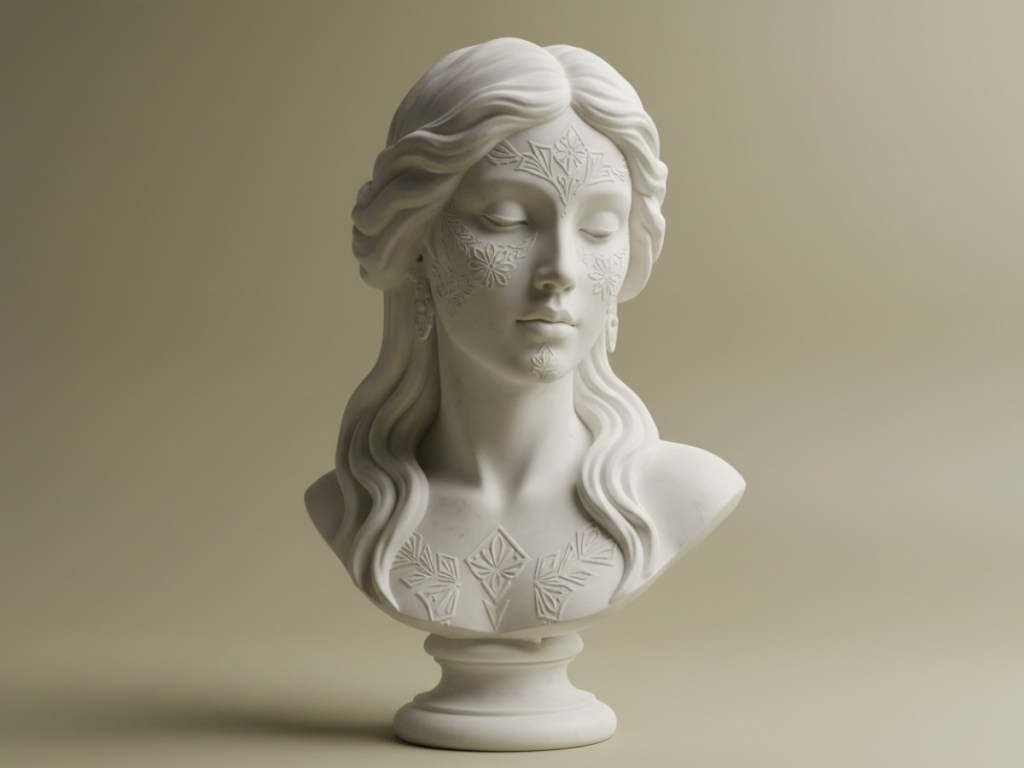
Morana — The Shadow of Winter
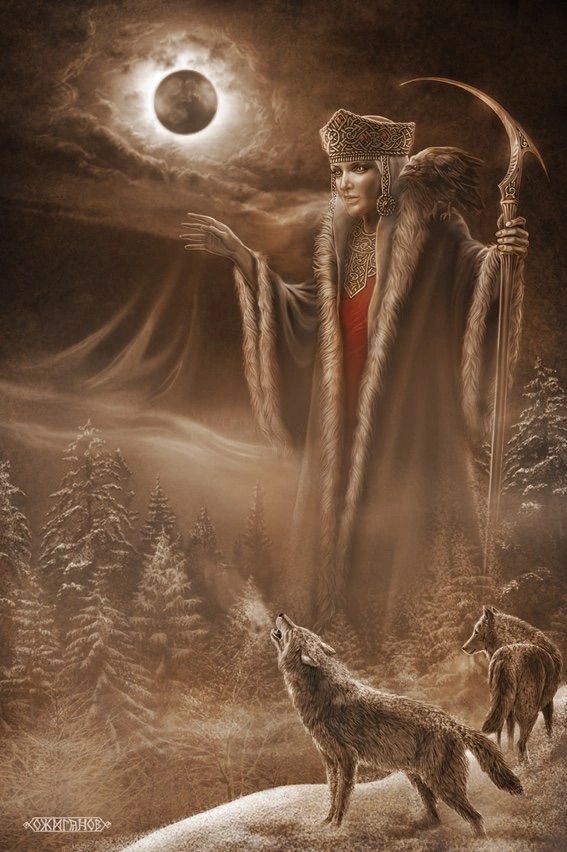
Even as Mokosh’s bounty was gathered, Morana’s shadow lengthened. Morana (Marzanna), goddess of death, frost, and winter, crept into villages on the wind that stripped the trees bare. She was woven into effigies of straw, dressed in rags or bridal gowns, carried through the fields in a grim procession. Then she was drowned or burned, her body returned to water or flame, her reign ended—if only for a while.
Her presence was a reminder that all warmth fades, all life must die to be reborn. Every leaf that fell was her sigh; every frost on the window, her touch. Autumn was her herald, painting the world in rust and ash before she came fully into her icy throne.
Rusalki — The Restless Spirits of Water
If you walked near rivers in autumn dusk, you might hear laughter—soft, sorrowful, enticing. These were the rusalki, water maidens caught between life and death. Once, they were seen as spirits of fertility and fields; later, as dangerous echoes of drowned women, luring the unwary into their embrace.
Autumn suited them. The rivers darkened, the nights grew long, and the rusalki’s presence was felt in rippling water and whispering reeds. They were beauty tinged with danger, longing with loss—the very essence of the season.

Domovoi — The Hearth’s Quiet Guardian
Yet not all autumn spirits were foreboding. The domovoi, the small household guardian with beard and ancient eyes, grew ever more important as nights stretched long. Families left him offerings of bread, milk, or a slice of the evening meal, tucked into a warm corner. In return, he guarded the hearth, warned of danger, and ensured peace through the bitter cold.

Myth Retelling: The Domovoi by the Hearth
As the nights deepened and frost pressed its fingers against the windows, the family gathered close to the hearth. The flames whispered, shadows danced, and in the quiet corner, unseen yet always present, the domovoi stirred.
Small as a child, with beard as white as woodsmoke, he watched with ancient eyes. The family had left him a piece of bread on the hearthstone, a little bowl of milk beside it. He nodded in approval, for such gestures warmed him more than the fire itself.
When the wind howled at the door, he hushed it. When the rafters groaned, he pressed his hand against them, keeping the beams steady. To the children, tucked under blankets, he brought dreams of safety. To the parents, he gave peace of mind—that their home, their hearth, and their hearts were guarded.
In autumn’s darkening days, when Morana’s breath crept closer and the fields lay bare, it was the domovoi who kept hope alive in the hearth’s glow. He was the spirit of home, the guardian of warmth, the quiet promise that even in the coldest night, the fire would not go out.
Autumn as a Threshold
For the Slavs, autumn was never just decay—it was a weaving of gratitude and preparation, mourning and reverence. It was Mokosh’s blessing of plenty, Morana’s whisper of endings, rusalki’s restless lament, and the domovoi’s gentle watch.
When the leaves gild the ground and nights grow long, we too stand where they once stood: in the space between thanks and silence, between firelight and frost, where myth breathes with every falling leaf.
Copyright Note
All Slavic deities, spirits, and mythological creatures appearing on Myths & Stories are explained as truthfully as I found them in the sources—though remember, myths have many voices and each source may sing a slightly different tune.
The retellings, poetic twists, and original stories here are my own creations. Please don’t borrow them without asking first—Baba Yaga might chase you through the forest if you do.
© ernawrites.com


 Myths & Stories
Leave a comment