
In Slavic lands, winter was never just a season. It was a presence.
It arrived quietly, without ceremony, settling into forests and villages like a held breath. Snow did not merely fall. It sealed. Rivers did not simply freeze. They slept. Slavic gods do not conform to any kind of duality; they are not divided into good and evil. They embody forces of nature and everything that nature brings with it, abundance and loss, protection and danger, stillness and survival. And people understood that winter was not something to defeat, only something to endure with respect.
To survive winter was not a test of strength, but of balance.
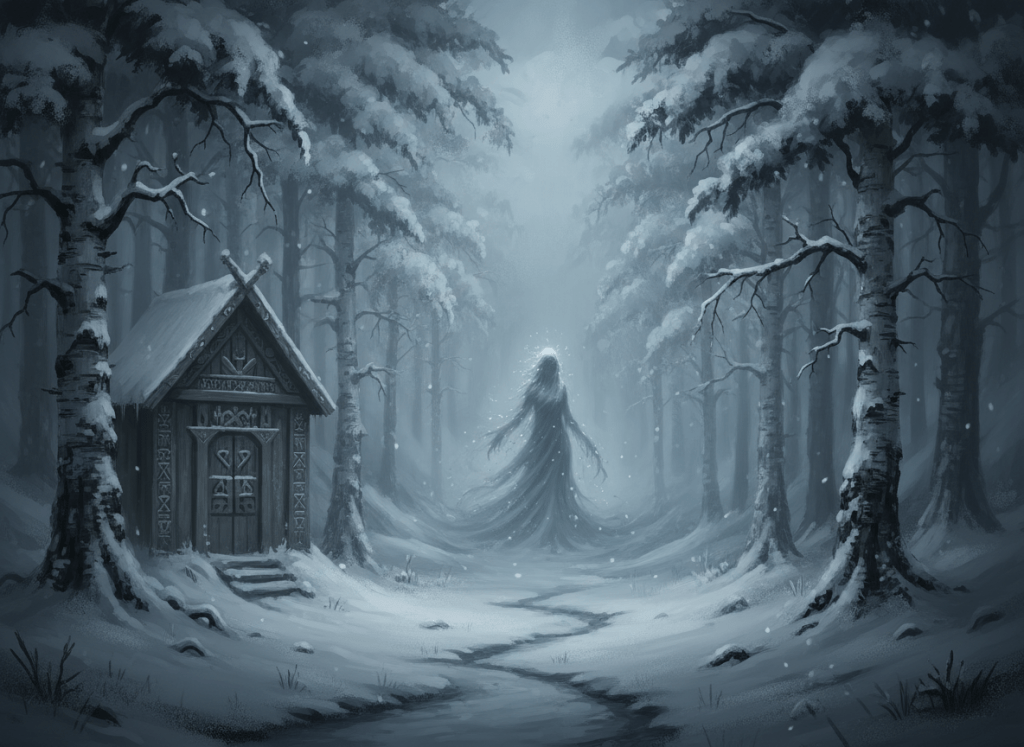
The Old Gods of Cold and Stillness
Among the Slavs, winter belonged to more than one spirit. It was carried by Moroz or Morozko, the frost-bringer, whose breath turned air into glass and fields into silence. He was not cruel, but exacting. Moroz rewarded preparation and punished carelessness. Those who honored him with warmth, food, and caution were spared. Those who mocked the cold learned quickly that winter listens. Over time, especially with Christian influences and later Soviet secularisation, this figure transformed into the beloved, benevolent gift-bringer similar to Father Christmas.
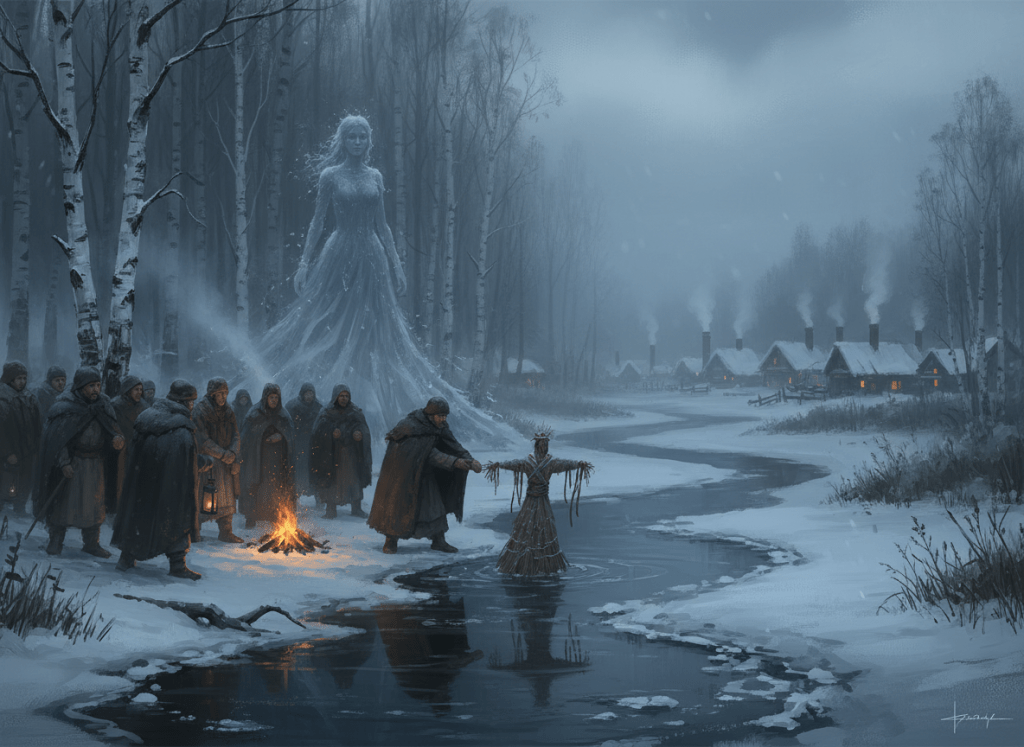
Then there was Marzanna or Morana, goddess of winter and death, whose reign marked the slow dying of the earth. She was feared, but also understood. Marzanna was not evil. She was necessary. Without her, there could be no spring, no rebirth, no return of green.
In many villages, effigies of Marzanna were carried through the streets and cast into rivers at winter’s end. It was not a banishment born of hatred, but a ritual farewell. A recognition that her time had passed.
Winter as a Teacher
Winter in Slavic mythology was a season of restraint. The land rested. Travel slowed. Nights grew long enough to invite stories. People gathered indoors, close to hearth fires, sharing bread, words, and silence.
This was not accidental.
Winter taught patience. It reminded people that not everything grows all the time. Some things must lie dormant. Some answers only come after waiting.
In a world governed by seasons, winter was the pause between breaths.
The Thin Veil of Midwinter
Midwinter nights were believed to be liminal. The veil between worlds thinned. Ancestors lingered closer. Dreams grew heavier, more vivid. It was a time for divination, but also caution.
Doors were closed early. Candles were lit with intention. Words were chosen carefully.
To speak recklessly in winter was to invite misfortune. Silence, on the other hand, was protective.
Endurance Over Triumph
Unlike heroic myths filled with conquest, Slavic winter stories rarely celebrate victory over nature. There is no slaying of winter, no conquering of frost. There is only coexistence.
You keep the fire alive.
You share what little you have.
You wait.
And when spring finally returns, it is not because winter was defeated, but because its work was done.
Why These Myths Still Matter
Even now, long after central heating and electric light have softened winter’s edge, these myths linger. They remind us that stillness is not failure. That rest has a purpose. That survival is sometimes quieter than triumph.
Winter teaches us to listen inward. To slow our steps. To accept that not every season is meant for blooming.
And perhaps that is why these myths endure. Because we still recognise winter when it arrives in our lives. In moments of waiting. Of grief. Of silence.
The old stories whisper what our ancestors already knew: winter will pass. But until it does, it asks only one thing of us.
To endure with care.
Sources & References
This article and retelling draw from a combination of folklore studies, ethnographic records, and mythological research, including:
- Ivanits, Linda J. Russian Folk Belief
- Gimbutas, Marija. The Slavs
- Afanasyev, Alexander. Russian Fairy Tales
- West Slavic and South Slavic seasonal ritual records (Marzanna/Morana/Morė)
- Polish, Czech, and Slovak ethnographic traditions surrounding the Marzanna drowning ritual
Interpretations are my own poetic retellings informed by folklore rather than strict historical reconstructions.



 Myths & Stories
Leave a comment