
There are novels that move like a train, all noise and momentum, and then there are novels that drift like warm air through an open window. The Artist belongs to the second kind.
It unfolds in careful strokes, attentive to silence, to gesture, to the fragile tension between creation and possession. This is not a novel driven by spectacle. It is driven by observation.
It is slow and filled with the soft tension of people who carry too many unspoken things inside them.

A Sun-bleached Farmhouse in Postwar Provence
Lucy Steeds’ novel is set in 1920, in a remote corner of Provence, not long after the First World War had ended. Europe is still bruised, trying to remember how to breathe normally again. The war lingers like heat in the stones.
At the centre of the story is Edouard Tartuffe, a reclusive and celebrated painter who lives in an isolated farmhouse. He rarely leaves, rarely receives visitors, and guards his art like a jealous deity guarding fire.
Living with him is his niece, Ettie, who has spent most of her life in his shadow. She cooks, cleans, prepares his paints, and keeps the house running. Her world is small, controlled, and quiet, but beneath the stillness lives a sharp, observant mind and a longing she barely allows herself to name.
Summoned by a mysterious letter bearing the single-word “Venez,” Joseph Adelaide, a young Englishman, arrives into this tense, silent household. He comes as a journalist, hoping to write an article about the famous painter and perhaps give his writing career a much needed push. But Joseph is also a man shaped by the war. He is estranged from his family and burdened by guilt, grief, and expectations he never quite met.
So the farmhouse becomes a strange little stage where three wounded lives circle one another:
- an artist obsessed with light,
- a niece who longs for freedom and expression,
- and a young outsider trying to reinvent himself.
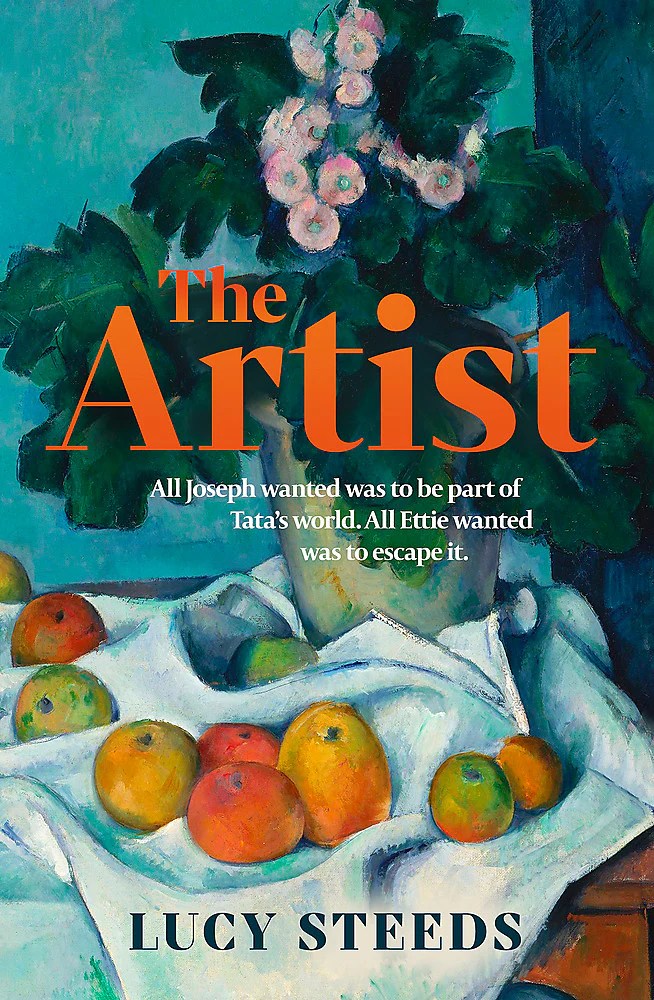
A Summer Thick with Secrets
Most of the novel unfolds during a single Provencal summer. The air is heavy, the house is isolated, and everything feels slightly claustrophobic. Tartuffe controls not only his art but also the people around him. No visitors are allowed. No distractions. No independence for Ettie.
Joseph’s arrival disrupts this fragile balance. His curiosity pulls him deeper into the household’s rhythms and silences. And as he grows closer to Ettie, he begins to sense the tension beneath her calm exterior.
Ettie, meanwhile, is not as passive as she first appears. She has spent years watching, learning, absorbing the language of art without ever being allowed to speak it herself. One line from the novel captures this quiet defiance:
“I have spent my life observing. It turns out it was the perfect training.”
It is a small sentence, but it holds the entire emotional core of the book: the difference between being present in art and being allowed to create it.
The Shadow of the War
Although the story takes place after the war, its presence is constant. Joseph’s past as a conscientious objector shapes his relationship with his family and with himself. His brother suffers in a hospital, a reminder of the psychological wounds the war left behind.
The war also explains the mood of the world around them. Everything feels fragile. People are rebuilding, but the cracks are still visible. Ambitions are quieter, dreams more cautious, and art becomes a kind of refuge from the noise of history.
In this way, the novel isn’t just about painting. It is about what people do after the world breaks them a little.
Art as Power, Art as Refuge
What struck me most about this novel is how quietly it interrogates power. Art, in Steeds’ hands, is not romanticised. It is not simply inspiration and devotion. It is currency. It is control. It is sometimes a battleground.
The protagonists’ relationship to their respective work feels intimate and uneasy at once. Creation becomes both refuge and exposure. The act of making art offers freedom, yet it also reveals vulnerabilities that cannot be easily hidden.
There is a tension here that feels deeply honest: the desire to be seen, and the simultaneous fear of what that visibility might cost.
The Cost of Ambition
Ambition in The Artist is not triumphant. It is complicated. It asks questions about validation, legacy, and the subtle ways creative communities can both nurture and erode confidence.
There is something quietly unsettling about how recognition functions within the story. Success feels conditional. The novel does not offer easy catharsis, but it does offer clarity.
Art, Steeds seems to suggest, is rarely separate from the structures that surround it.
Writing Style and Atmosphere
Lucy Steeds writes with a light, painterly touch. The prose is filled with sun, dust, silence, and colour. The house feels alive. The heat feels almost physical. And the emotional tension builds slowly, like paint drying in layers.
It is the kind of book that invites you to slow down. To notice the way a character looks at a window. The way a sentence lingers. The way a quiet moment can carry more weight than a dramatic one.
If you enjoyed this, read…
If The Artist left you wanting more stories about art, secrets, and creative women, these titles would make excellent companions:
- The Muse by Jessie Burton – another atmospheric novel about hidden artists, ambition, and the cost of genius.
- Girl with a Pearl Earring by Tracy Chevalier – a quiet, intimate story of art, observation, and power.
- The Paris Library by Janet Skeslien Charles – for readers who enjoy historical settings shaped by war and resilience.
- The Goldfinch by Donna Tartt – a sweeping literary novel about art, loss, obsession, and the strange ways beauty anchors us to life.
Final Thoughts
The Artist is a novel about light, but also about everything that hides in the shadows. It is about the people who paint, and the people who watch. About ambition, control, and the slow courage it takes to step out of someone else’s story and into your own.
It is not loud or dramatic. It doesn’t rush. Instead, it unfolds like a canvas slowly filling with colour, until you step back and realise the picture has changed completely.


 Myths & Stories
Leave a comment